Personas vs tensions: which one actually drives decisions?
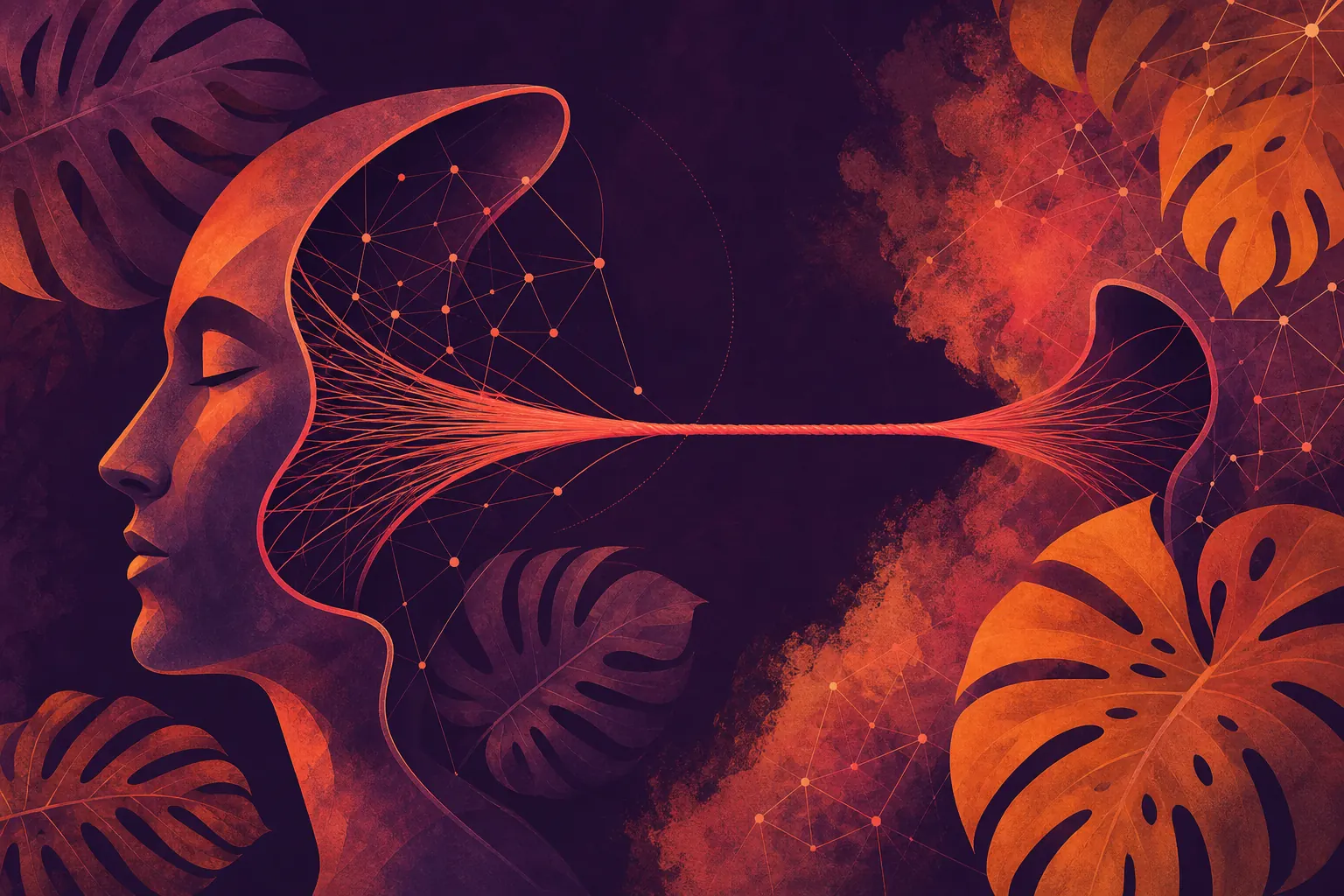
Personas describe who your audience is; tensions describe what they are torn between. Decisions move at the tension, so a persona without a tension is a profile, not an insight. The most useful audience work defines a small set of personas, names the active tension for each, and links it to the moment when it bites.
Why do so many persona decks go unused?
Most marketing teams have a persona deck somewhere. It usually has stock photos, a name like "Busy Brenda", a list of hobbies and a favourite brand or two. It was expensive, it was presented once, and it now lives in a shared drive. The reason it went unused is not that personas are wrong. It is that the deck answered "who?" and stopped. Creative teams need "why now?" and "what is stopping them?".
What is the difference between a persona and a tension?
- Persona: a grounded portrait of a type of person: situation, motives, language, channels.
- Tension: a felt conflict between two things that person values, for example convenience versus control, or honesty versus kindness.
- Angle: the stance a brand takes to help resolve the tension.
- Insight: persona plus tension plus angle, expressed as one sentence a creative team can brief from.
This is the same structure SOMIN uses in its platform: insights are built by combining personas, tensions and angles. We find it works because it forces every insight to answer who, why and what the brand will do about it.
How does a tension turn a persona into an insight?
Take a persona we see often in B2B listening: a marketing manager in Singapore, recently promoted, responsible for a regional budget for the first time. As a persona, that is accurate and inert.
Now add the tension: they want to look confident in front of leadership, but privately they are not sure their data is good enough to defend a decision. That is the insight the DEFY and SOMIN listening calls out repeatedly: authenticity thrives where insecurity ebbs. People who feel exposed reach for vanity metrics and borrowed certainty. People who feel supported by evidence and colleagues make braver, truer calls.
The angle follows naturally: "know it before you show it". A brand helping this person should offer evidence they can stand behind and a way to check it with peers, not another dashboard. We go deeper on this specific tension in authenticity and insecurity in marketing teams.
A simple framework you can use
- Define three to five personas from evidence, not imagination. Each needs a situation and a voice.
- Name one active tension per persona in plain words: "X versus Y".
- Attach a moment when the tension becomes urgent: a promotion, a festive season, a renewal date.
- Choose an angle the brand can credibly own.
- Write the insight sentence: "[Persona] wants [X] but fears [Y], so [brand] [angle]."
- Trace the evidence back to what real people said, so anyone can challenge it.
Where does the evidence come from?
Traditional persona work leans on a dozen interviews and a survey. Both are valuable, and both struggle with tensions because people rarely describe their own conflicts accurately when asked directly. Public conversation is different: people complain, joke, ask for advice and argue, and the tensions surface on their own.
Mindfuse runs persona and tension discovery on SOMIN perspective studies, which read large volumes of real conversation and cluster it into personas, tensions and moments. Every conclusion stays linked to the posts behind it. That matters for trust inside client teams: when a creative director pushes back, we can show the actual language people used. You can see how SOMIN describes the approach on its page for brands, and the SM Universe case study is a good illustration of audience insight shaping a brand's direction.
Once insights exist, they need to travel into search and AI answers too. Our sibling SNMRush takes the questions and tensions audiences voice and turns them into answer-ready content for search and AI assistants.
Common mistakes
- Writing tensions as product problems ("wants faster delivery") rather than human conflicts.
- Giving every persona five tensions, so none of them gets acted on.
- Using ethnicity or age as the persona's defining feature instead of situation.
- Skipping the moment, so media cannot time anything.
- Losing the trail back to evidence, so the insight becomes opinion.
How do you hand insights to creative and media?
Give each team a one-page card per persona: the insight sentence at the top, three verbatim phrases from real conversation, the moment and its likely channel, and one thing to avoid saying. Creative teams use the verbatims to find voice; media teams use the moment to plan timing; everyone uses the avoid list to stay respectful. Review the cards after each campaign. Which tension produced work that moved people, and which produced work that felt flat? Over a few cycles, the cards become a living asset rather than a deck in a drive, and new team members can pick them up in an afternoon. The test of good audience work is not how impressive it looks in a presentation but how often it is quoted in briefs six months later.
The point of view
Personas are necessary and not sufficient. If your audience work cannot tell a copywriter what the person is torn between, it has not finished its job. Tensions are where empathy and commercial impact meet, and in a region as culturally layered as Southeast Asia, they are also where you avoid stereotypes, because a tension describes a situation anyone can be in.
Have a persona deck gathering dust? Send it to ask@mindfuse.sg and we will show you which tensions are missing.
Frequently asked questions
Can a persona have more than one tension?
Yes, but name one active tension per moment. Briefing creative on several tensions at once usually produces work that resolves none of them.
Are tensions the same as pain points?
Related but different. A pain point is a problem; a tension is a conflict between two things a person values. Tensions explain why the pain point persists.
How long does persona and tension discovery take?
A focused study for one category and market typically runs a few weeks, including SOMIN perspective analysis and validation sessions with real people.
Start a tension study
Mindfuse is a consumer-psychology and cultural-insight consultancy. We decode personas, tensions and cultural codes from real conversations, then turn them into briefs your teams can act on.
Email ask@mindfuse.sg →