Singapore's festive calendar: read the codes, not the clichés
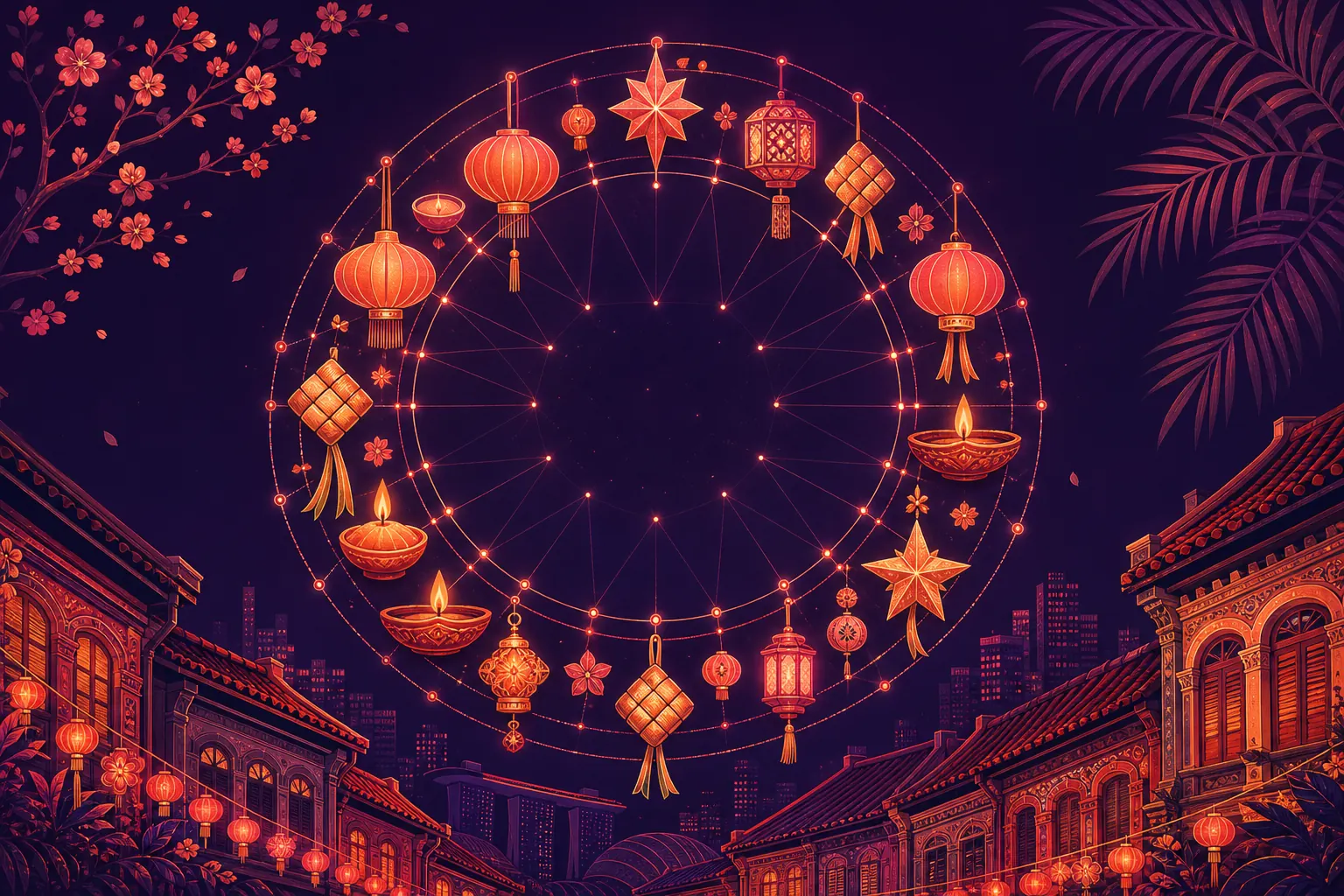
Festive marketing in Singapore works when brands decode what each celebration means to the people who keep it: reunion, forgiveness, renewal, generosity. It fails when brands swap colours and motifs onto the same campaign. Plan each festival around its emotional code and the tensions people feel during it, and involve people who celebrate it.
Why does festive marketing so often feel recycled?
Singapore's calendar is generous: Chinese New Year, Hari Raya Puasa and Haji, Deepavali, Vesak, Christmas, plus National Day and many family-specific occasions. For a busy brand team that can feel like a production line. Change the red to green, swap the mandarin oranges for ketupat, repeat. Audiences notice. The people who actually celebrate a festival read the clichés as a sign the brand saw the date on a calendar rather than understanding the season.
The fix is not more budget. It is better understanding of the code each festival carries, and of the tensions that rise during it.
What is a cultural code?
- Cultural code: the shared, often unspoken meaning a group attaches to a symbol, ritual or behaviour.
- Emotional core: the feeling a celebration exists to produce or restore.
- Festive tension: a conflict that becomes sharper during the season, such as generosity versus budget.
What are the codes and tensions to start from?
These are starting hypotheses for discussion with people who celebrate each festival, not definitions to paste into a brief. Every household practises differently.
Chinese New Year
Code: reunion and renewal, with prosperity as a wish for the family rather than a show of wealth. Tensions: tradition versus modern living, generosity with ang bao versus a tight budget, and the familiar pressure of relatives' questions about careers and relationships.
Hari Raya Puasa
Code: forgiveness, gratitude and togetherness after a month of fasting. Tensions: hospitality for open houses versus fatigue, and spiritual focus versus commercial noise. Messaging that respects the fasting month before the celebration tends to land better than early sales pushes.
Deepavali
Code: light over darkness, fresh starts, hospitality. Tensions: preserving family traditions while living busy urban lives, and making the home welcoming on limited time.
Christmas
Code in Singapore: both a religious occasion for some and a broadly shared season of gifting and gathering for many. Tensions: thoughtful gifting versus office gift-exchange obligations, and celebration versus year-end burnout.
How should a brand plan the festive year?
- Audit your right to speak. Does your brand play a real role in this festival? If not, a respectful greeting may be better than a campaign.
- Read the season's conversations. What are people worried about, joking about and planning this year? Codes are stable; tensions shift with the economy and the mood.
- Find the tension your brand can ease. A grocery brand can ease the open-house workload. A bank can ease the ang bao budget squeeze with a practical tool.
- Co-create with people who celebrate. Involve colleagues, creators and community voices early, not as a final check.
- Avoid the costume. Motifs are fine; they cannot be the idea.
Loss-averse booking behaviour peaks around festive travel and reunion dinners, which connects to our piece on kiasu as a design brief.
Where does research come in?
Codes come from culture and lived experience. Tensions come from listening. Mindfuse runs festive tension studies on SOMIN perspective studies, reading what people say in the weeks around each celebration and clustering it into personas and moments. Because every theme links back to its posts, community advisers can check our reading rather than trusting a summary.
For how insight turns into activity across a busy calendar, SOMIN's social media manager shows planning tied to audience signal, and the Pepsi India case study is relevant reading for a market where festivals shape the commercial year. If you are drafting dozens of festive variants, our sibling GPT3 Marketing builds brand voice systems that keep generated content human-edited and on-tone.
Festive respect checklist
- Have people who celebrate this festival shaped the idea, not just approved it?
- Is the idea built on the emotional core, not on motifs?
- Are we addressing a real tension of this year's season?
- Have we avoided commercial pushes during sensitive periods such as fasting?
- Would this still feel right if it ran without our logo?
What about National Day and smaller occasions?
National Day carries a code of shared belonging that cuts across communities, which makes it attractive to brands and easy to overdo. The strongest work tends to celebrate ordinary shared experiences, such as the void deck, the hawker queue or the school canteen, rather than borrowing national symbols for a sales message. Smaller occasions matter too. Vesak, Thaipusam, Mid-Autumn and Good Friday each carry meaning for the people who observe them, and many are better honoured with restraint than with promotions. A useful rule is that the more sacred an occasion is to its community, the quieter a brand should be. Restraint is itself a signal of respect, and audiences notice the brands that know when not to sell.
The point of view
Festive marketing is one of the clearest tests of whether a brand understands the people it serves. In a multicultural city, respect is visible in the details: timing, tone, who was in the room. Treat each festival as a living culture with its own code, and the season becomes a chance to earn trust rather than borrow attention.
Planning next year's festive calendar? Write to ask@mindfuse.sg and start a festive tension study.
Frequently asked questions
Should every brand run campaigns for every festival?
No. If your brand has no genuine role in a festival, a respectful greeting is often better than a campaign that feels opportunistic.
How early should festive research start?
Ideally three to four months ahead, so that tension findings can shape the creative idea rather than just the execution.
Can AI help with festive marketing?
AI can surface what people are discussing and help draft variants, but cultural judgement must come from people who celebrate the festival.
Start a tension study
Mindfuse is a consumer-psychology and cultural-insight consultancy. We decode personas, tensions and cultural codes from real conversations, then turn them into briefs your teams can act on.
Email ask@mindfuse.sg →